
Voice Search Is How People Ask for Directions Now
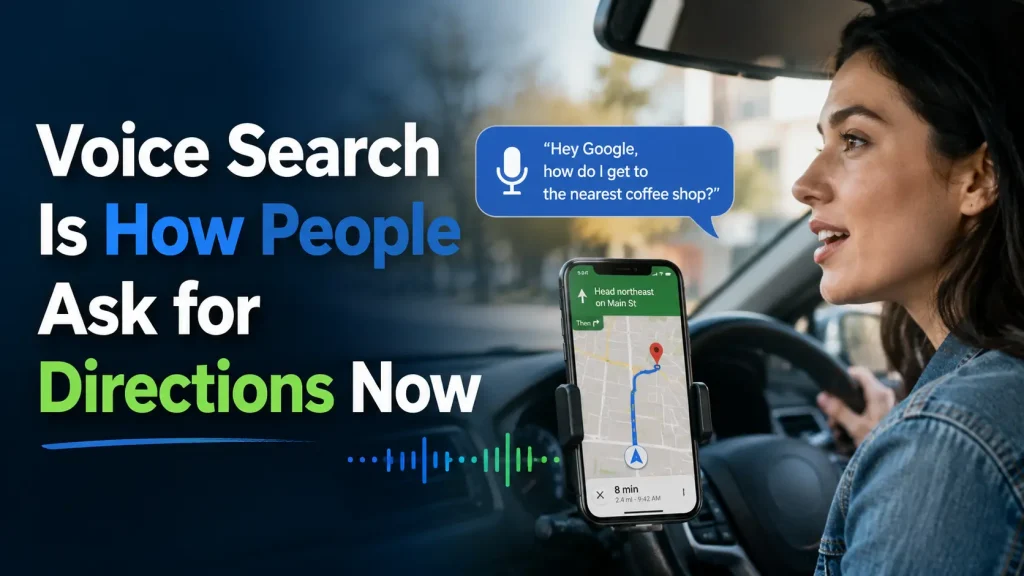
Ask your phone or a smart speaker for the nearest open pharmacy and you’ll get a spoken answer in seconds. More people are searching by voice than ever, especially when they’re driving, cooking, or juggling kids. The way they phrase those spoken questions is different from typing, and small businesses that account for it get an edge.
People Talk in Full Questions
When people type, they use short fragments like ‘coffee downtown.’ When they speak, they ask full questions like ‘where’s the closest coffee shop that’s open right now?’ That natural phrasing tends to be longer and more specific, and it often carries strong intent to act soon.
Notice how much information is packed into a spoken question. ‘Closest,’ ‘open right now,’ and the type of business all appear in one breath. A voice tool tries to satisfy every part of that, which means the business it names has to match on location, hours, and category all at once.
Match the Way People Actually Ask
The businesses that do well with voice search answer real questions in plain language. Think about what a customer would say out loud about your business and make sure that information exists clearly online: your hours, your location, what you sell, whether you’re open now. Straightforward answers are exactly what voice tools read back. If you can imagine a customer asking it out loud, make sure the answer exists somewhere clear on your listings.
Accurate Details Do the Heavy Lifting
Voice results lean heavily on trusted, consistent information. If a tool isn’t confident about your hours or location, it won’t confidently recommend you. Keeping your details accurate across your profile and directories like Biz Rooster gives voice assistants the clarity they need to name your business as the answer.
There’s usually just one spoken answer, not a page of options to scroll through. That raises the stakes: being the second-best match on a screen still gets you seen, but being second in a voice result often means being invisible. Clean, confident information is how you earn that single spoken slot.
Conclusion
Voice search rewards the same fundamentals as everything else in local marketing, just spoken out loud. Answer the questions customers ask naturally, keep your details accurate, and describe your business in plain terms. Do that and you become the easy, confident answer when someone asks their phone for help. As more people search by talking, the businesses that answer plainly are the ones that get named out loud.
Frequently Asked Questions
Do I need to do anything special for voice search?
Nothing exotic. The best preparation is clear, accurate information and plain answers to common questions. Voice tools pull from trusted sources, so keeping your hours, location, and services consistent and easy to understand does most of the work. Focus on clarity rather than any special voice trick.
Why are voice searches often longer than typed ones?
Because people speak in full sentences. Typing invites shorthand like 'pizza near me,' while speaking sounds like 'where can I get pizza delivered near me right now?' These longer, natural phrases usually reflect clear intent, which is why answering real questions plainly helps you show up for them.
Is voice search only used on phones?
No. People use it on phones, smart speakers, cars, watches, and other devices. The common thread is hands-free convenience, often when someone is busy or on the move. That situation usually means they're ready to act, which makes being the confident answer especially valuable.
How does accurate business info affect voice results?
Heavily. Voice assistants tend to recommend businesses they're confident about, and confidence comes from consistent, accurate information across trusted sources. If your hours or location conflict from one site to another, a tool may skip you rather than risk giving a wrong answer aloud.